
Polymer vs stainless steel outdoor kitchen cabinets—which material makes more sense for your Florida home? Both are worth comparing when planning an outdoor kitchen, but the decision involves more than appearance or general claims about weather resistance. Cabinet construction, finishes, maintenance requirements, and compatibility with your appliances all deserve consideration.
For homeowners in Lakewood Ranch and surrounding Florida communities, the location of the outdoor kitchen also matters. Cabinets installed beneath a covered lanai may experience different conditions from those on an exposed patio. Before selecting a cabinet system, homeowners should consider sunlight, rain, humidity, and possible salt-air exposure.
Outdoor Kitchen Cabinets & More offers weather-resistant polymer outdoor cabinetry with multiple door styles, colors, and woodgrain options. While stainless steel is another material homeowners may encounter when comparing outdoor kitchens, it is not presented here as a confirmed product offering from the company. This guide explains five important factors to review before deciding which cabinet system fits your space, preferences, and project plans.
Polymer vs Stainless Steel Outdoor Kitchen Cabinets: Start with the System
“Polymer” and “stainless steel” are starting points, not complete specifications. Neither label alone tells you how a finished cabinet is assembled, what its hardware requires, or whether the manufacturer approves it for your particular setting.
Before making a choice, ask for information that covers:
- The cabinet box, door, drawer, and hardware materials—not just the visible fronts.
- Approved outdoor uses and any exposure limitations.
- Cleaning instructions for every component and finish.
- Appliance installation requirements that affect the cabinetry.
- Written warranty terms and exclusions, if a warranty is offered.
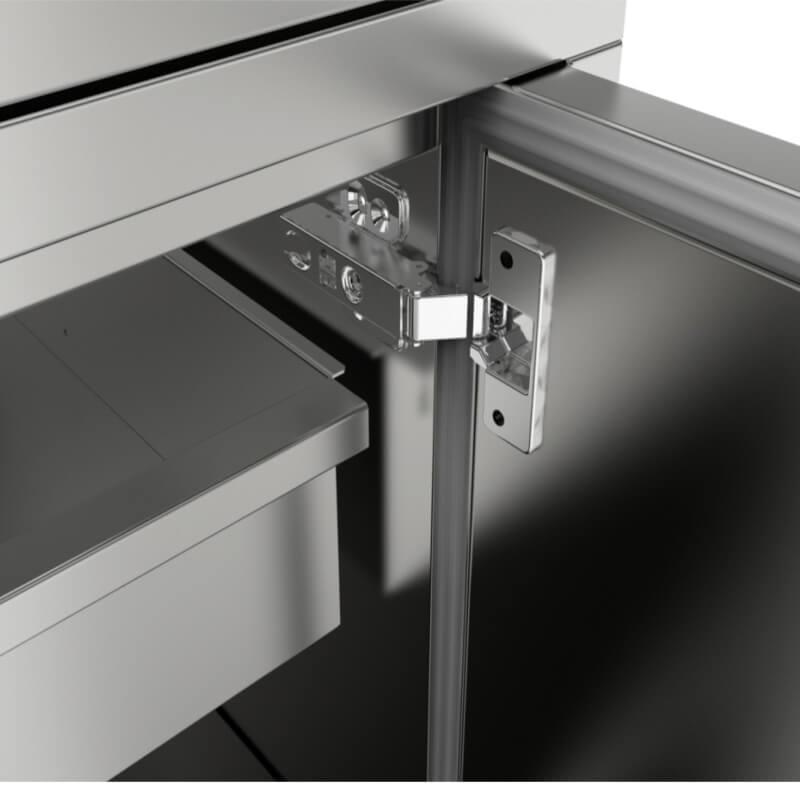
Avoid treating “weather-resistant” as a promise of waterproof or maintenance-free performance. Likewise, do not assume a stainless steel cabinet needs no care simply because it is intended for outdoor use.
Where polymer cabinetry fits the decision
Polymer is worth considering when you want outdoor cabinetry with a coordinated selection of door styles and colors rather than choosing cabinets solely to match an appliance finish.
The polymer outdoor cabinetry offered by Outdoor Kitchen Cabinets & More has cabinet boxes with hardware-free interlocking joints. That description applies to the box construction; it should not be interpreted as meaning every door, drawer, or accessory is hardware-free.
The cabinets page lists fifteen designer colors and six woodgrain options, with woodgrain faces available as an upgrade. Door styles include Cove, Open French, Plano, Raised Panel, Shaker, Slat, Sport, and V-Groove.
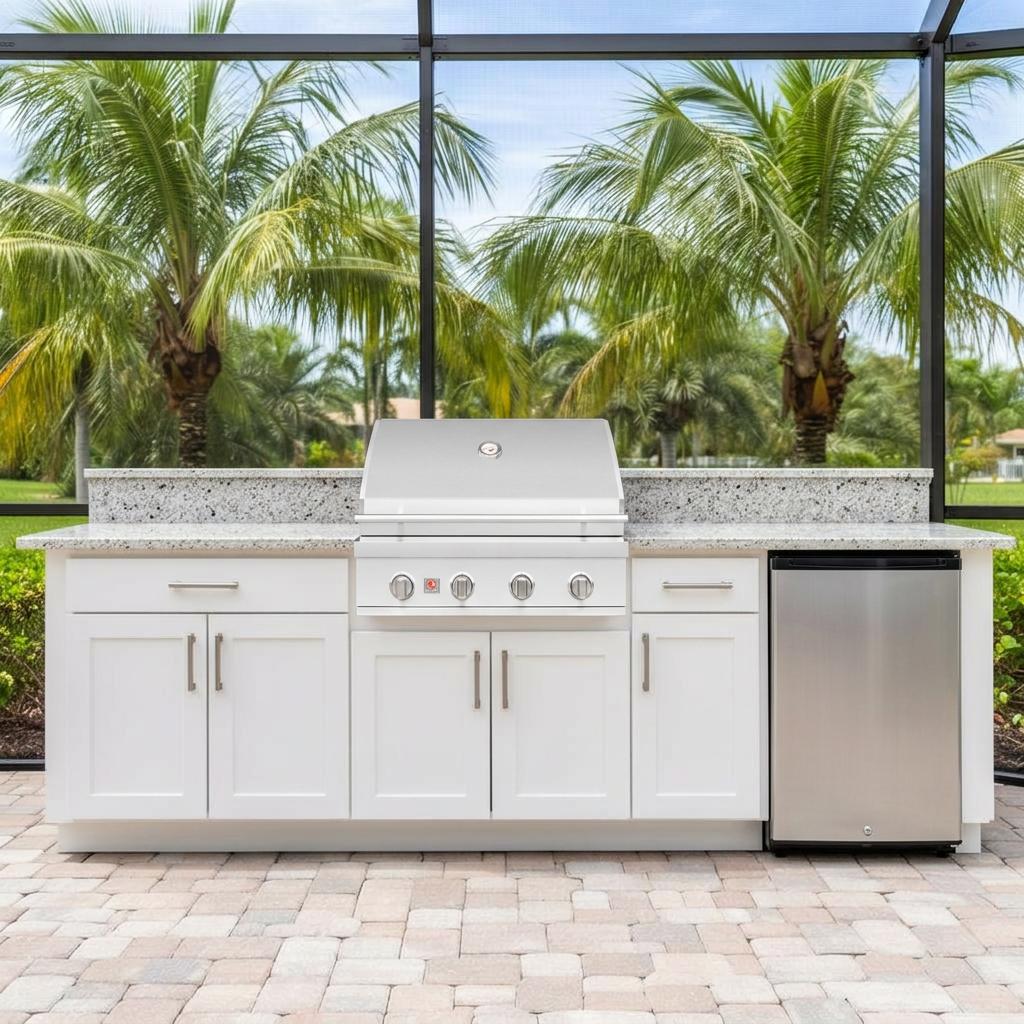
These choices give you specific design details to evaluate alongside the home’s exterior, countertop, and nearby furnishings. Compare actual samples rather than deciding from a color name alone.
Questions to ask about a proposed polymer system include:
- What care do the cabinet surfaces and moving hardware require?
- What guidance applies to direct sun and the site’s other exposure conditions?
- How will the selected grill’s installation requirements affect the cabinet design?
- Which storage configurations are available in the chosen door style?
The goal is to verify the complete design—not to turn a weather-resistant material description into a blanket durability claim.
Where stainless steel cabinetry fits the decision
If you are considering stainless steel for a metal-finished kitchen, begin with the exact product specification. Do not compare a fully detailed polymer proposal with a stainless steel option identified only by its material name.
Ask the stainless steel supplier to identify the cabinet material specification, finish, construction method, and intended installation environment. For a property with possible salt-air or poolside exposure, request written guidance addressing those conditions rather than relying on a general “outdoor” designation.
Stainless steel products can differ in their composition, finishes, and maintenance requirements. The British Stainless Steel Association provides technical information about stainless steel materials and their applications. For an outdoor kitchen, always compare that general guidance with the specific cabinet manufacturer’s recommendations.
Appearance also deserves a closer look. If the goal is to coordinate cabinets with a grill or refrigerator, compare finish samples with the actual appliance selection. Do not assume separately sourced metal surfaces will look identical.
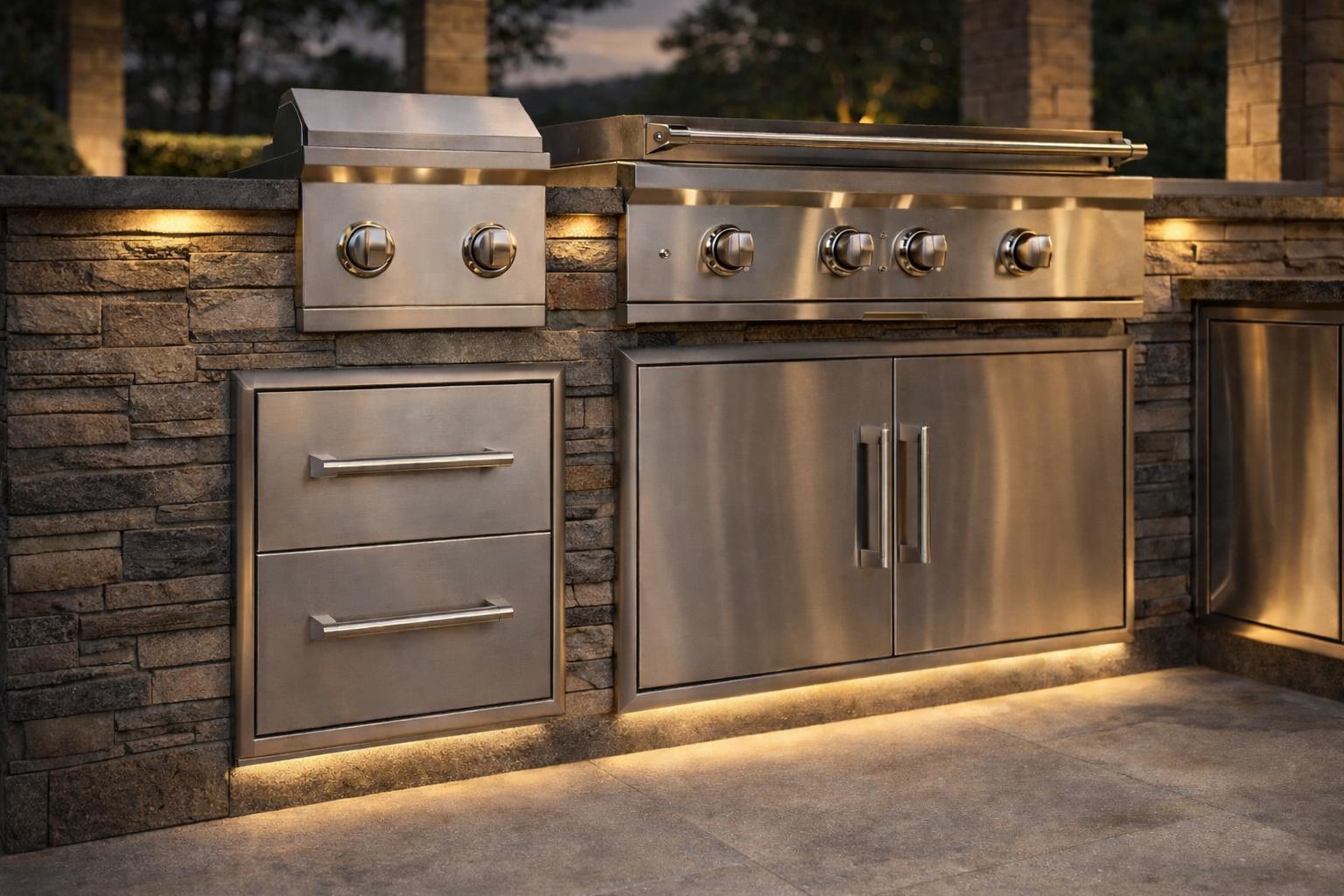
For a stainless steel proposal, ask:
- What maintenance does the manufacturer specify for this finish and location?
- Are there restrictions involving cleaning products or exposure conditions?
- What materials are used for hinges, slides, fasteners, and internal components?
- How are appliance openings and access for servicing handled?
A stainless steel option should earn its place in the project through those answers, not through an assumption that all stainless steel cabinets perform alike.
Compare both options against your Florida setting.
Rain and humidity
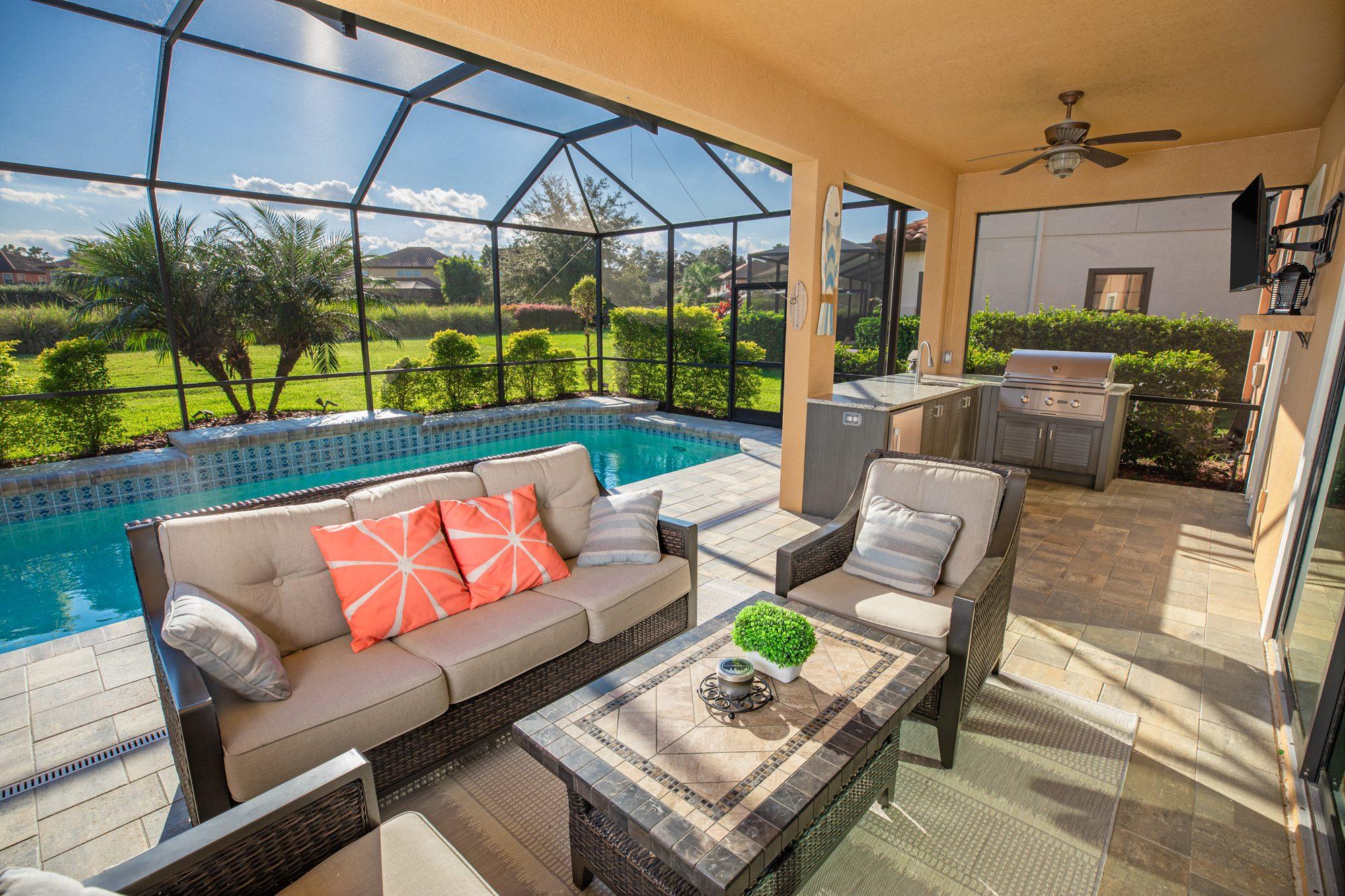
Explain where rain reaches the proposed kitchen, including areas near the edge of a roof or screen enclosure. Ask how each cabinet system is intended to be used in that setting and what protection, cleaning, or storage precautions its manufacturer recommends.
Do not assume cabinet doors will keep everything inside dry. Confirm whether the items you want to store are appropriate for the proposed outdoor storage conditions.
Sun and heat
Identify which cabinet faces receive direct sun and when. Ask each supplier about approved exposure, finish care, and any relevant product limitations.
Keep appliance heat requirements separate from general weather resistance. Cabinet material does not replace the need to follow the selected appliance’s installation instructions, including applicable clearances and enclosure requirements.
Cabinet weather resistance should not be confused with heat protection around a grill. The National Fire Protection Association’s grilling safety guidance offers general safety information, while the selected appliance’s installation manual should guide the specific clearances and enclosure requirements.
Salt air and poolside use
Tell the designer or supplier about possible salt-air exposure and proximity to the pool. Ask for product-specific care guidance for both cabinet surfaces and hardware. Neither “polymer” nor “stainless steel” is enough information to establish suitability for every Florida property.
Compare usable storage and the complete installed scope
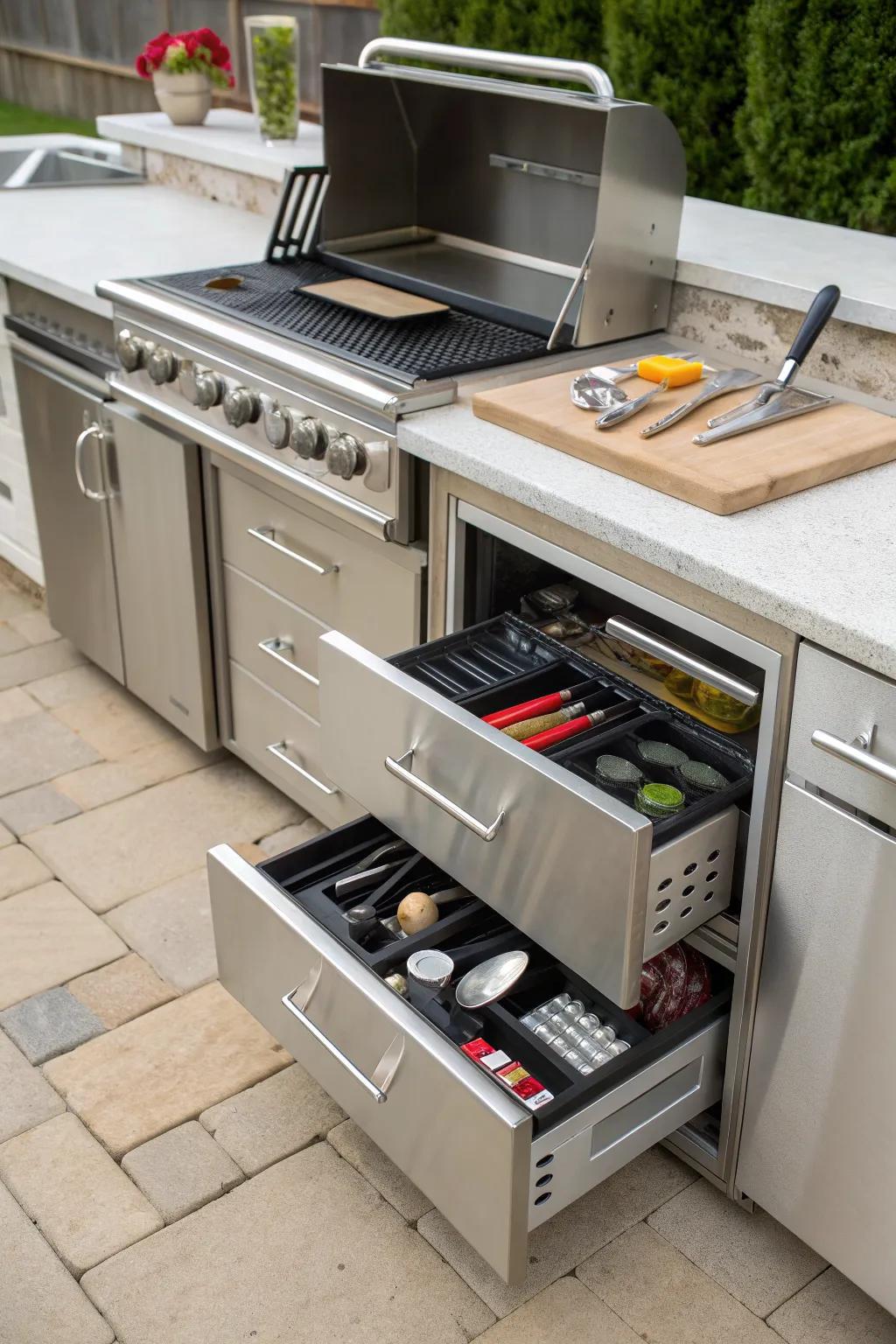
Material matters, but the cabinet arrangement still needs to work for the way you cook. List the items you intend to keep outside: serving trays, grilling tools, cookware, and entertaining supplies. Then check their fit against the actual proposed storage dimensions.
Separate usable storage from appliance space. A refrigerator, sink, or grill enclosure should not be counted as though it were an empty storage cabinet. Ask how utility connections and service access affect the final layout.
For a meaningful proposal comparison, hold the scope as consistent as possible. Compare the same appliance selections, approximate layout, countertop scope, storage functions, delivery, and installation responsibilities. Identify upgrades separately, including upgraded cabinet faces where applicable.
There is no supported universal price ranking between polymer and stainless steel here. A material label alone is not a reliable basis for predicting the total project cost.
Which should you choose?
Choose the system whose documented requirements match your site and whose design fits your priorities.
The polymer cabinetry offered by Outdoor Kitchen Cabinets & More is worth evaluating if its weather-resistant construction, interlocking cabinet boxes, and available door styles and colors align with your plans. A stainless steel alternative deserves consideration when its specific finish and construction appeal to you and its supplier can document suitability and care requirements for your setting.
Outdoor Kitchen Cabinets & More provides professional design consultations and custom 3D renderings addressing the customer’s space and budget. Its appointment-only Lakewood Ranch showroom includes cabinet door styles, colors, appliances, countertops, and layouts, allowing you to evaluate the proposed elements together.
Frequently asked questions
Are polymer outdoor kitchen cabinets waterproof?
The approved description is weather-resistant, not an unqualified waterproof claim. Confirm the selected system’s exposure limitations and care instructions, and ask what is appropriate to store inside.
Is stainless steel automatically better near salt air?
Do not make that assumption based on the material name alone. Ask the supplier for the exact product specification and written guidance for the property’s exposure conditions.
Can polymer cabinets be used with an outdoor grill?
Please have the designer verify the specific cabinet-and-grill combination against the appliance’s installation requirements. General outdoor suitability does not establish compatibility with every grill or enclosure design.
Can I see polymer cabinet styles before deciding?
Outdoor Kitchen Cabinets & More offers private showroom appointments Tuesdays through Saturdays at 11033 Gatewood Drive, Lakewood Ranch, FL 34211. Displays include cabinet door styles and colors.
To evaluate polymer cabinetry as part of a complete outdoor kitchen plan, Request Free Design & Estimate from Outdoor Kitchen Cabinets & More.


