
Replace outdoor kitchen grill without replacing cabinets—is it possible? For many homeowners, keeping an existing outdoor kitchen while upgrading the grill is an appealing option. However, replacing a built-in grill isn’t always as simple as removing the old appliance and installing a new one. The replacement grill must be compatible with the existing opening, surrounding cabinetry, countertop, and installation requirements.
For homeowners in Lakewood Ranch and surrounding Florida communities, outdoor kitchens are often part of a covered lanai, poolside patio, or dedicated entertaining space. If the existing cabinets and countertop are still in good condition, keeping them may be worth exploring. But a grill with a similar advertised width isn’t necessarily a direct replacement, and some installations may require additional modifications.
Outdoor Kitchen Cabinets & More offers outdoor kitchen design, appliance supply and installation, and outdoor appliance servicing. This guide covers five important areas to review before deciding whether to replace your grill, make targeted upgrades, or renovate more of your outdoor kitchen.
Start with the reason you want a new grill
Separate an appliance problem from a kitchen problem. Are you replacing a grill that no longer works as expected, changing cooking preferences, or trying to resolve an awkward installation?
If you like the existing kitchen and the concern is limited to grill operation, ask whether servicing is worth evaluating before selecting a replacement. Outdoor Kitchen Cabinets & More offers outdoor appliance servicing as well as appliance supply and installation. Whether service or replacement makes sense depends on the appliance’s condition and the work required.
If you want a different grill size or configuration, approach the project as an upgrade that may affect surrounding components. Keeping every cabinet should be a goal to evaluate, not a condition that overrides the new appliance’s requirements.
Replace Outdoor Kitchen Grill Without Replacing Cabinets: Check the Dimensions
Two grills described with similar widths should not be assumed to fit the same opening. Use the proposed model’s installation documentation to compare its requirements with the existing kitchen.
Have the installer review:
- Opening width, depth, and height: Measure the actual installation space rather than relying on the old grill’s product description.
- Countertop configuration: Verify the front edge, surrounding surface, and any existing cutouts or trim.
- Space behind and above the grill: Review lid movement and the manufacturer’s placement requirements.
- Support details: Please confirm how the replacement appliance should be supported within the installation.
- Access below and around it: Consider connections, inspection, and future servicing.
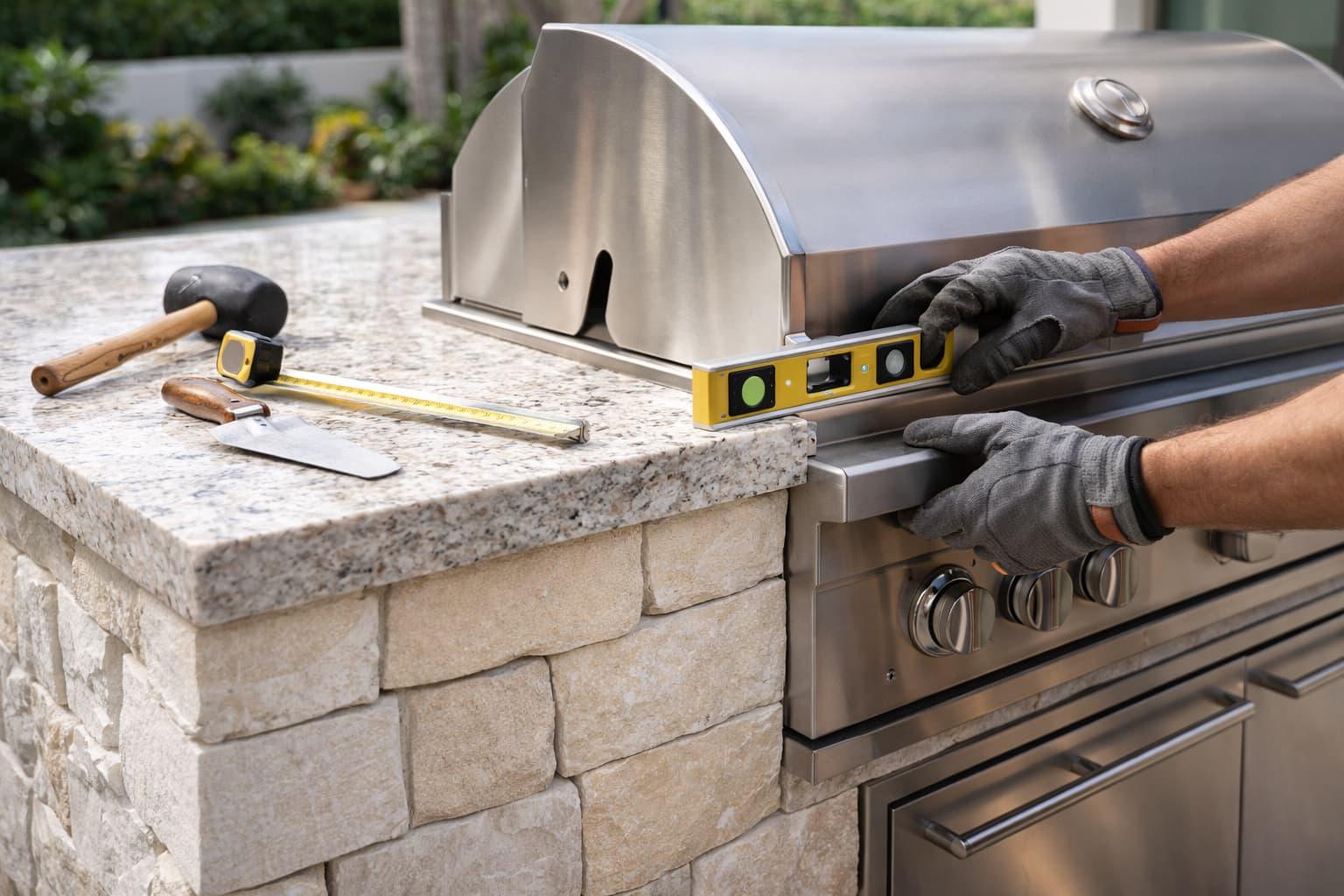
Gather the old grill’s model information if available, along with photographs of the front, surrounding countertop, and accessible interior. Preliminary measurements are useful for discussion, but have installation dimensions verified before ordering.
A replacement that appears close in size is not yet a confirmed fit.
Review the cabinets as part of the installation
Keeping the cabinetry requires more than checking whether the doors still look good. Ask the installer to assess the grill area and the condition of the adjacent cabinets, their joints, doors, and supporting components.
Look for visible damage, loose components, doors that no longer operate properly, and signs that previous modifications need closer inspection. These observations do not automatically mean the whole kitchen needs replacement; they identify what should be reviewed.
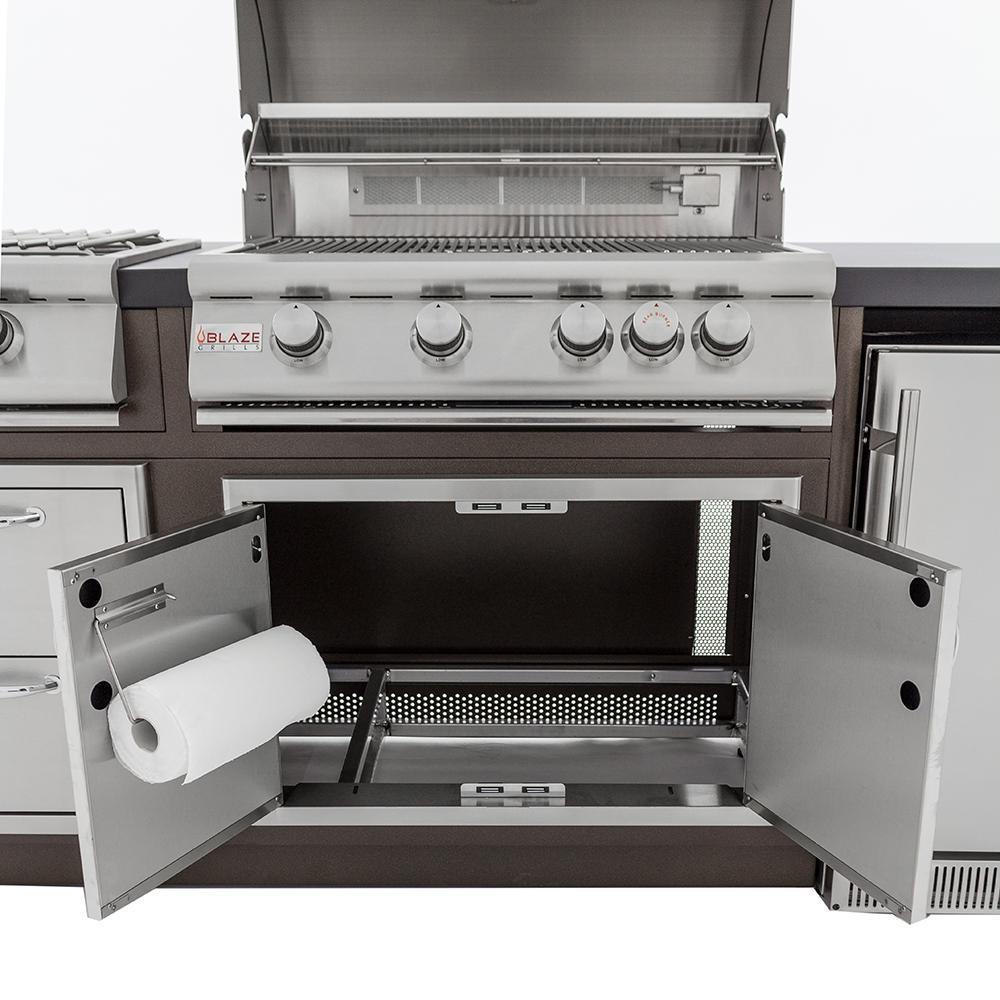
Cabinet material also belongs in the compatibility discussion. Outdoor Kitchen Cabinets & More offers weather-resistant polymer outdoor cabinetry. Weather resistance, however, should not be treated as proof that a cabinet material is suitable for direct exposure to grill heat.
For any existing cabinet system, ask the installer to verify the replacement grill’s requirements for surrounding materials, clearances, and any specified insulated jacket or other components. Do not assume the old installation establishes what the new appliance needs.
Check the countertop before committing to a grill
The countertop may be the most important consideration, even if the cabinets are worth keeping. Ask whether the new grill can use the existing opening and whether any proposed modification is appropriate for that particular surface and configuration.
Useful questions include:
- Does the existing opening match the replacement installation requirements?
- Would the change leave exposed gaps or unfinished edges?
- Does the grill require a different support arrangement?
- Would countertop work affect the backsplash or neighboring cabinets?
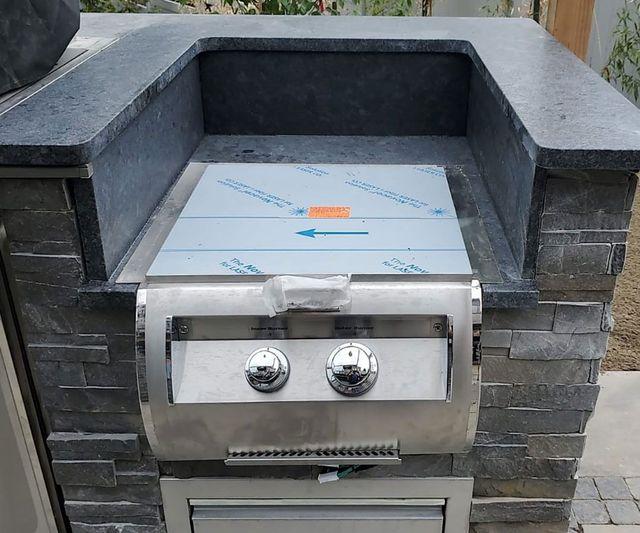
Do not assume an opening can simply be enlarged or patched. Have proposed surface changes reviewed by the appropriate installer or fabricator before purchasing the appliance.
If countertop replacement becomes part of a broader renovation, Outdoor Kitchen Cabinets & More recommends granite, quartzite, porcelain, and outdoor quartz. Its countertop and backsplash selection process involves fabricator partners. The material choice should follow the project’s requirements rather than a promise that every existing surface can be modified.
Recheck fuel, ventilation, and placement requirements
A grill that fits physically still needs an installation review. Please have the installer confirm the proposed model’s fuel type, connection requirements, access needs, ventilation instructions, and clearances. Refer any necessary utility work to the appropriate qualified professional.
This is particularly important when reviewing an existing kitchen beneath a lanai roof or near walls and other surrounding features. Do not treat an existing grill location as automatic approval for a replacement model.
Grill replacement involves more than matching the new appliance to an existing opening. The National Fire Protection Association’s grilling safety guidance provides general information about safe grill placement and use. For a built-in replacement, the selected grill’s installation manual and applicable local requirements should guide the specific installation.
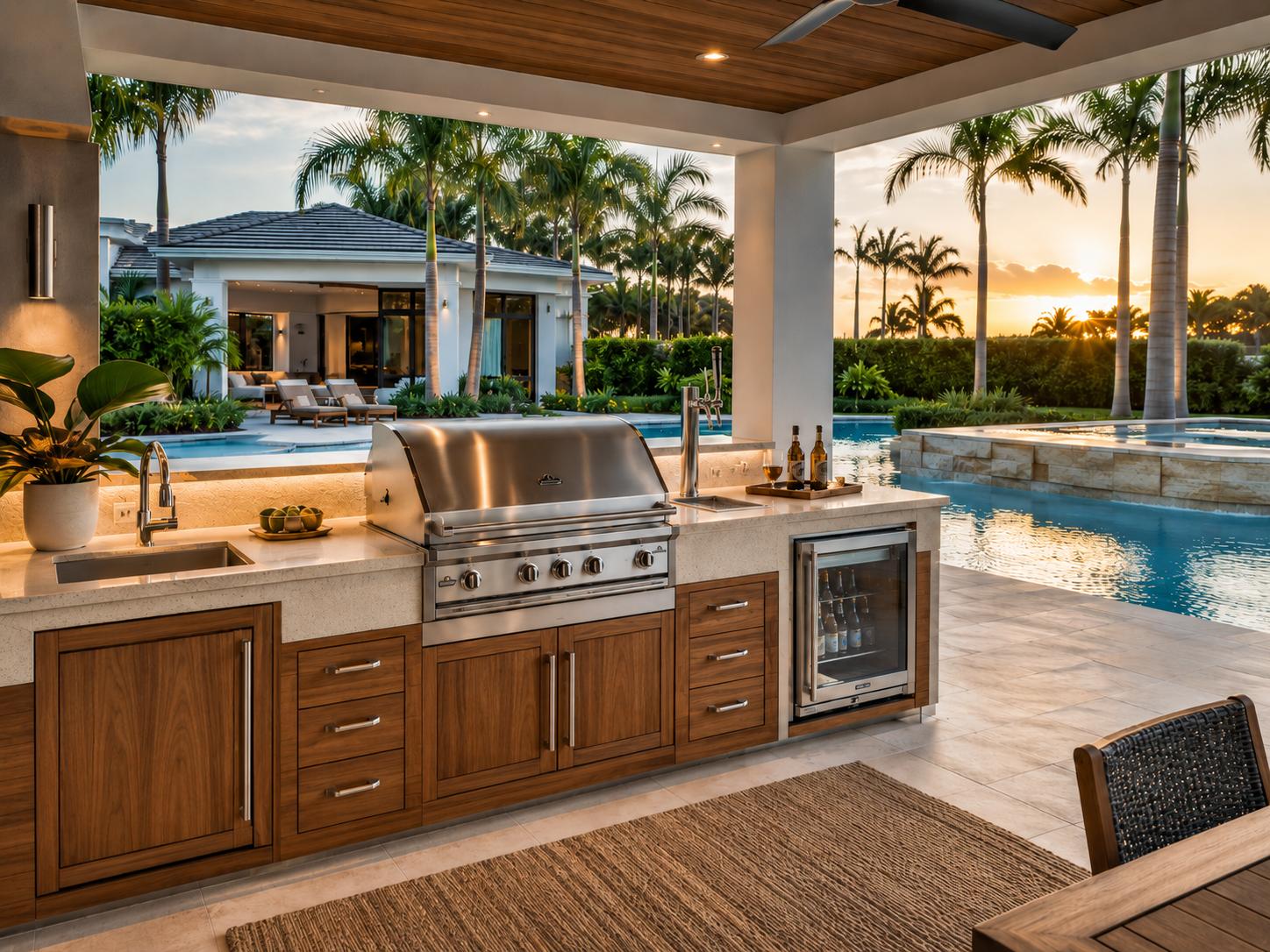
For Florida outdoor spaces, also describe the actual exposure: direct sun, wind-driven rain, nearby pool activity, and any salt-air exposure relevant to the property. Ask how the selected appliance’s installation and care instructions address those conditions. Avoid assuming that an outdoor appliance is appropriate for every outdoor location.
Fuel-burning appliances also require attention to ventilation and carbon monoxide hazards. The U.S. Consumer Product Safety Commission’s carbon monoxide safety information explains the risks associated with carbon monoxide exposure. Do not assume an existing covered outdoor kitchen location is suitable for a different grill model without reviewing the manufacturer’s instructions and applicable requirements.
Outdoor Kitchen Cabinets & More’s outdoor appliance offerings include grills and other kitchen appliances. Selection should account for the installation requirements as well as the cooking features you want.
Decide between a grill swap, a targeted upgrade, and a remodel
After the fit and condition review, sort the project into one of three paths.
Grill replacement with existing cabinetry
This is the path to evaluate when the cabinetry remains suitable, the opening matches, and the proposed installation can meet the new grill’s requirements without substantial surrounding changes.
Grill replacement with localized changes
A targeted upgrade may be worth considering when most of the kitchen works well but the grill area needs changes. Ask for a clear scope identifying affected cabinets, countertop work, required components, and connection work. Confirm what will remain untouched rather than assuming that only the appliance changes.
A broader kitchen renovation
Reconsider the overall kitchen when the desired grill requires extensive changes, the existing cabinets have unresolved condition issues, or the current layout no longer serves your needs. Compare the complete scope of each option—not just the appliance cost.
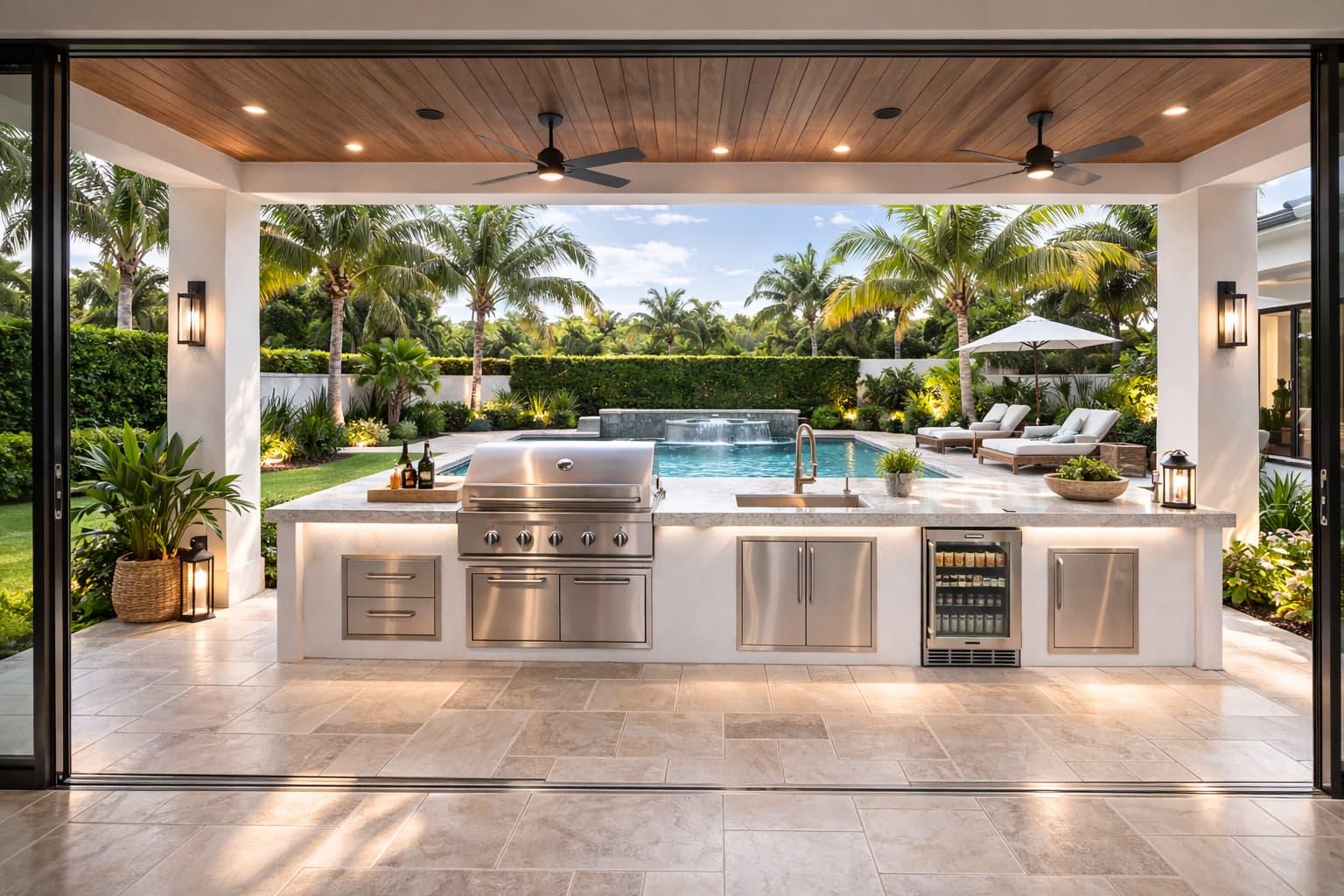
Outdoor Kitchen Cabinets & More provides professional design consultations and custom 3D renderings that address the customer’s space and budget. For a larger upgrade, those renderings can help you evaluate the proposed kitchen visually; they do not replace appliance installation documentation.
Frequently asked questions
-
Will a new grill fit if it is the same advertised width?
Not necessarily. Compare the actual opening with the new model’s installation dimensions, support requirements, clearances, and surrounding-material requirements.
-
Can I keep my countertop when replacing a built-in grill?
Possibly. That depends on the existing opening, countertop configuration, and replacement appliance. Have any proposed modification reviewed before ordering the grill.
-
Do polymer cabinets mean a grill can be installed without heat protection?
No such assumption should be made. Weather resistance is not a substitute for checking the appliance manufacturer’s requirements for surrounding materials and specified installation components.
-
Should I replace the cabinets whenever I replace the grill?
Not automatically. Assess cabinet condition, appliance compatibility, and the total scope of necessary changes first. The goal is a suitable installation, whether that involves keeping the cabinets or updating part of the kitchen.
Get the replacement scope clear before
If you plan to replace an outdoor kitchen grill without replacing the cabinets, start by reviewing the existing installation. Outdoor Kitchen Cabinets & More can help evaluate the grill opening, surrounding cabinetry, countertop configuration, and appliance requirements before you commit to a replacement. Request Free Design & Estimate to discuss your outdoor kitchen upgrade.


