
Outdoor refrigerator or beverage cooler? Choosing the right appliance for your outdoor kitchen depends on what you plan to store and how you use the space. If you regularly prepare meals outside, a refrigerator designed for food storage may be the better fit. If your main priority is keeping drinks cold and accessible while entertaining, a dedicated beverage cooler may make more sense.
For homeowners in Lakewood Ranch, Florida, outdoor kitchens often serve as gathering spaces for family and friends. Whether your setup is beside a swimming pool or under a covered lanai, the appliance you choose should be suitable for its intended outdoor location and compatible with the surrounding cabinetry.
Outdoor Kitchen Cabinets & More supplies and installs outdoor refrigeration appliances and offers custom outdoor kitchen design services in Lakewood Ranch. This guide compares outdoor refrigerators and beverage coolers, including storage needs, installation requirements, placement, and the situations where having both may be worth considering.
Outdoor Refrigerator or Beverage Cooler: Start with Your Storage Needs
Picture a typical afternoon or evening in your outdoor kitchen. Are you preparing dinner, serving drinks, or doing both?
Choose an outdoor refrigerator for a cooking-focused kitchen
A refrigerator is the more natural starting point if your storage list includes ingredients, prepared dishes, condiments, and drinks. Even then, confirm that the specific model is intended for the food you plan to store and can maintain the required storage conditions in its intended outdoor environment.
If you plan to store perishable ingredients or prepared food outdoors, temperature control should be part of your appliance selection. The U.S. Food and Drug Administration’s food storage guidance recommends keeping refrigerators at 40°F or below. Confirm that your selected outdoor refrigerator is designed to maintain appropriate food storage temperatures under its intended operating conditions.
Consider the shapes of your everyday items, not just the advertised capacity. A serving bowl, covered tray, tall condiment bottle, and pitcher make different demands on an interior. Check shelf adjustment, usable shelf dimensions, and door storage where available.
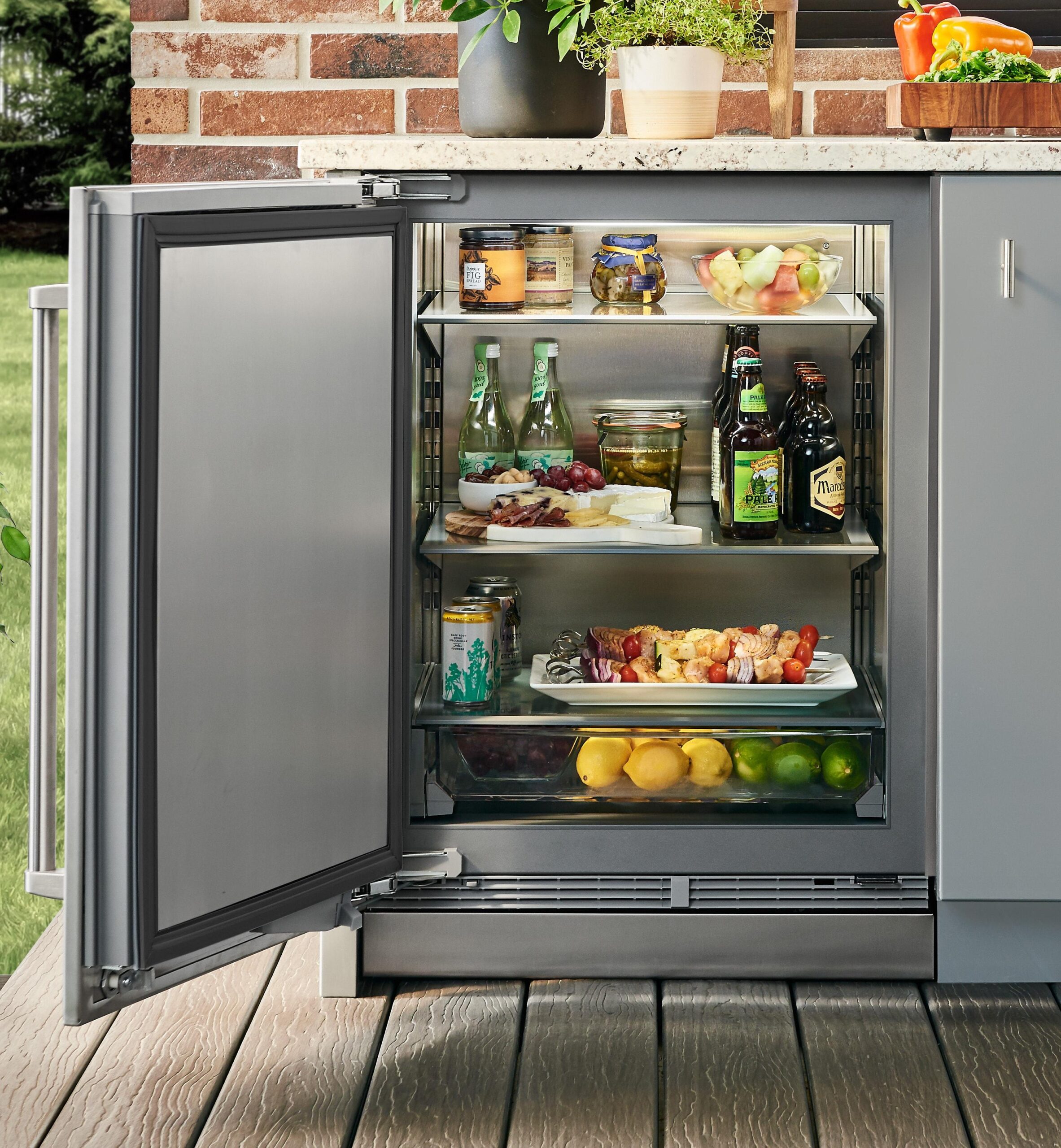
If your outdoor cooking usually involves bringing everything from the indoor kitchen just before grilling, you may not need much refrigerated food storage outside. The right choice depends on your routine, not the length of the appliance list.
Choose a beverage cooler for a drinks-focused space
A beverage cooler is worth considering when you mainly want organized storage for cans and bottles. It may suit a poolside refreshment station or an entertaining area where guests help themselves while someone else cooks.
Compare the interior against the beverages you actually buy. Do not assume a stated can capacity translates neatly into space for tall bottles, mixed drink sizes, or pitchers. Ask how the shelves can be arranged and how that arrangement affects usable capacity.
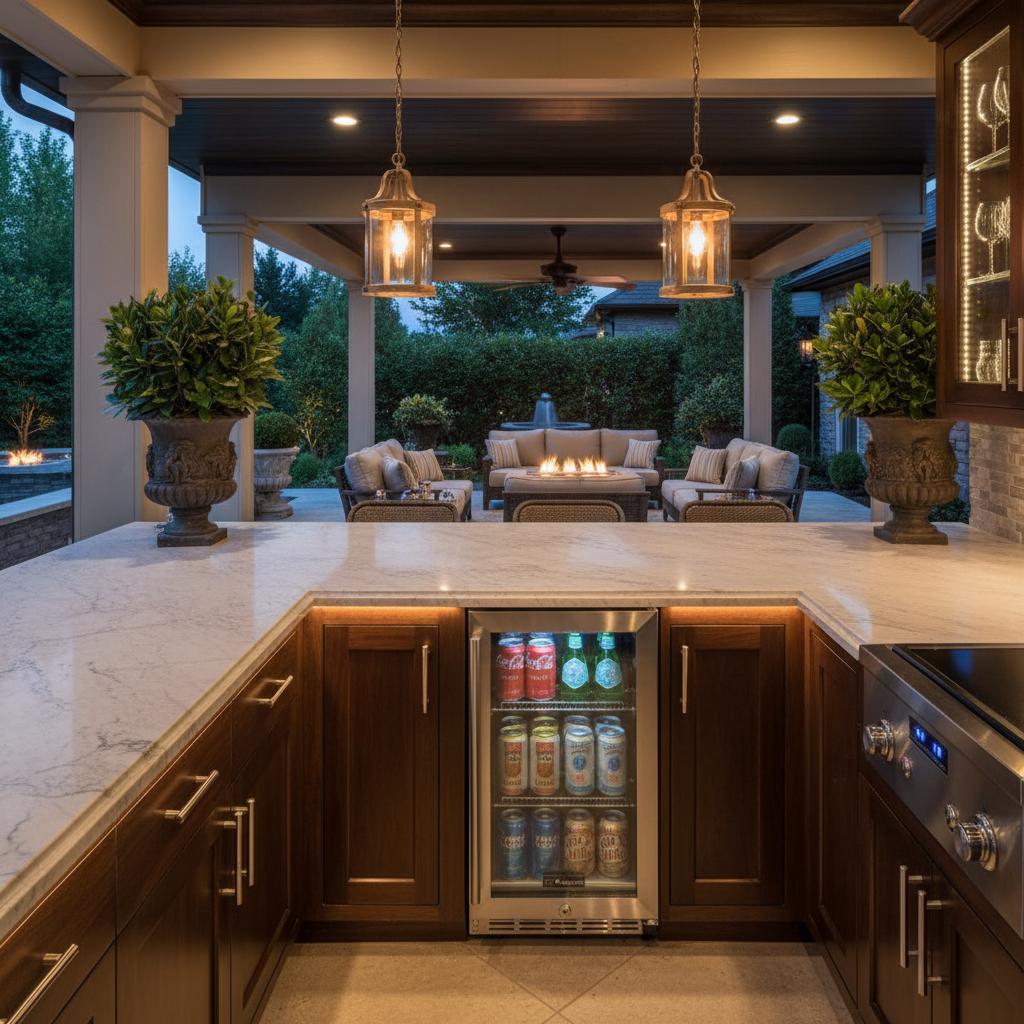
A beverage cooler should not automatically be treated as extra storage for perishable food. Confirm the manufacturer’s intended use and temperature specifications before planning to store anything beyond beverages.
Outdoor suitability is a requirement, not an upgrade
Whether you choose a refrigerator or beverage cooler, verify that the exact model is approved by its manufacturer for the proposed outdoor use. A covered lanai should not be treated as an indoor installation simply because it has a roof.
For a Florida project, discuss the actual location rather than relying on the general description “outdoor kitchen.” Useful questions include:
- Will direct afternoon sun reach the appliance?
- Could wind-driven rain or pool splash reach its location?
- What ambient operating conditions does the manufacturer specify?
- Are there exposure restrictions or special care instructions relevant to humidity or salt air?
- Is the appliance approved for installation within cabinetry, or does it require a different arrangement?
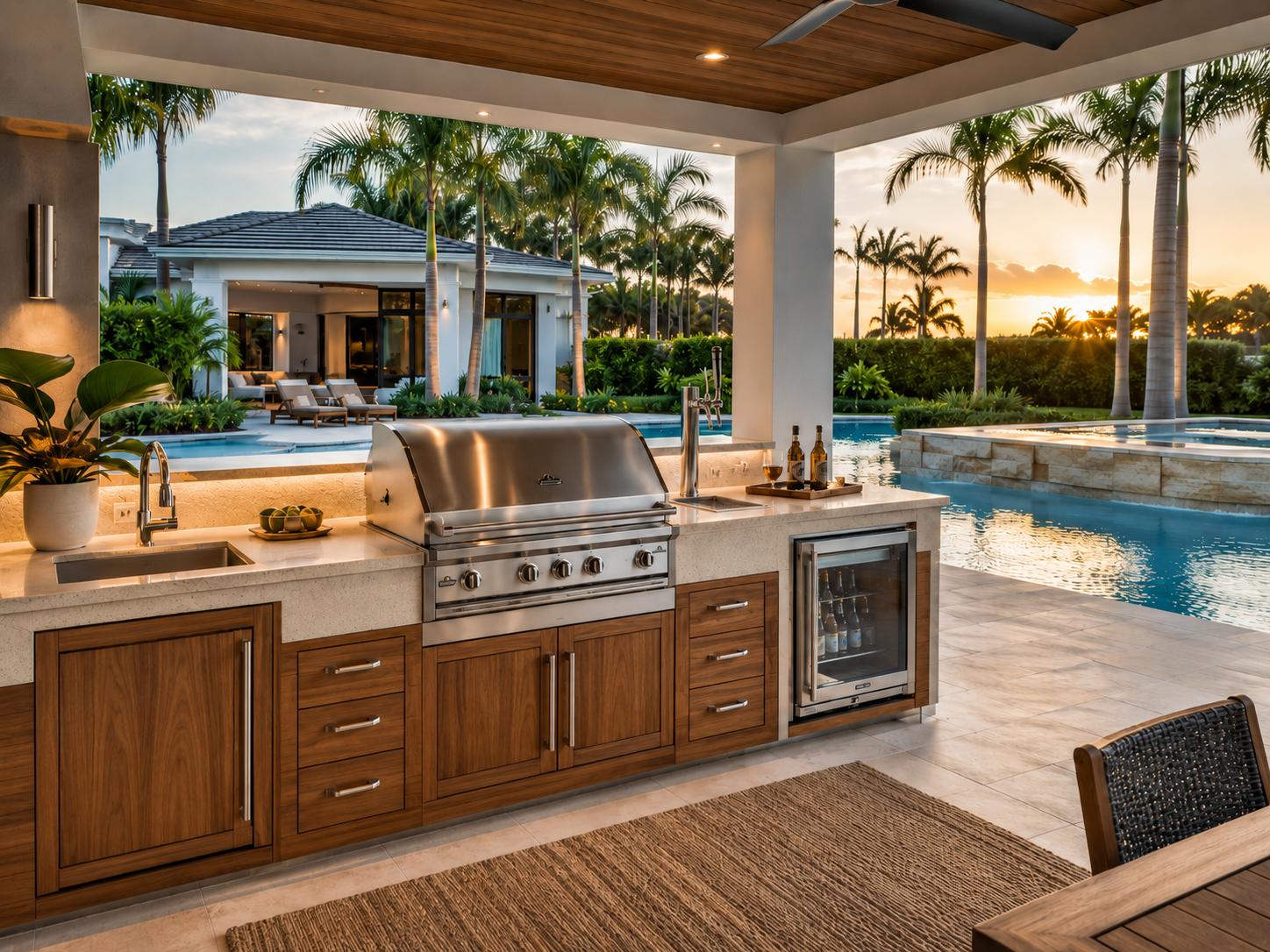
Do not assume a glass door, solid door, stainless finish, or outdoor label answers every placement question. Use the model’s installation and care documentation to evaluate the proposed setting.
Outdoor Kitchen Cabinets & More supplies and installs outdoor appliances, including refrigerators and beverage coolers. Comparing actual models during design is more useful than choosing solely by appliance category.
When storing perishable food in an outdoor refrigerator, consider how you will manage food safety if power is interrupted. FoodSafety.gov’s guidance on food safety during power outages explains important temperature and storage considerations. These precautions are especially relevant when refrigeration is part of an outdoor cooking and entertaining space.
Put food storage near preparation and drinks near guests
The appliance’s job should help determine its location.
If you choose a refrigerator primarily for ingredients, evaluate how you will move between refrigerated storage, preparation space, and the cooking area. Include a convenient place to set items down without treating the refrigerator’s proximity to the grill as more important than either appliance’s installation requirements.
If you choose a beverage cooler primarily for entertaining, consider access from the seating or poolside gathering area. Guests should be able to retrieve drinks without repeatedly interrupting food preparation.
Test the layout with the door open. Ask whether it interferes with a cabinet door, seating, or the route through the lanai. Confirm the available hinge arrangement and any door-swing requirements for removing shelves or accessing the interior.
This is where a custom 3D rendering can help you review the relationship between appliances, cabinetry, and gathering areas. Outdoor Kitchen Cabinets & More offers professional design consultations and custom 3D renderings that address the customer’s space and budget. A rendering supports layout decisions; the selected appliance’s documentation still governs its installation requirements.
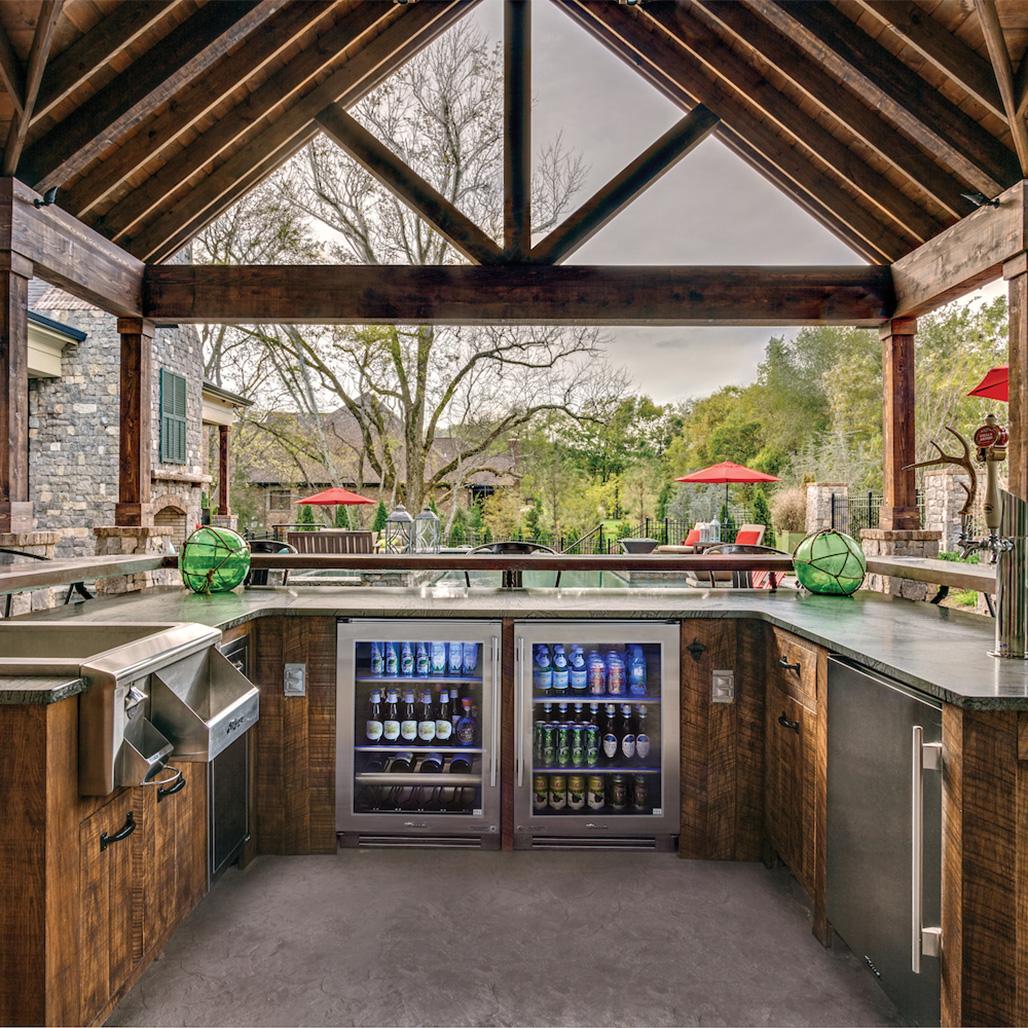
Select the appliance before finalizing its cabinet opening
Two appliances described with the same general width are not necessarily interchangeable. Before committing to cabinetry, confirm the selected model’s required opening, clearances, ventilation arrangement, electrical requirements, and access for servicing.
Avoid assuming that a freestanding unit can be enclosed or that every built-in model uses the same ventilation design. Those details must be checked model by model.
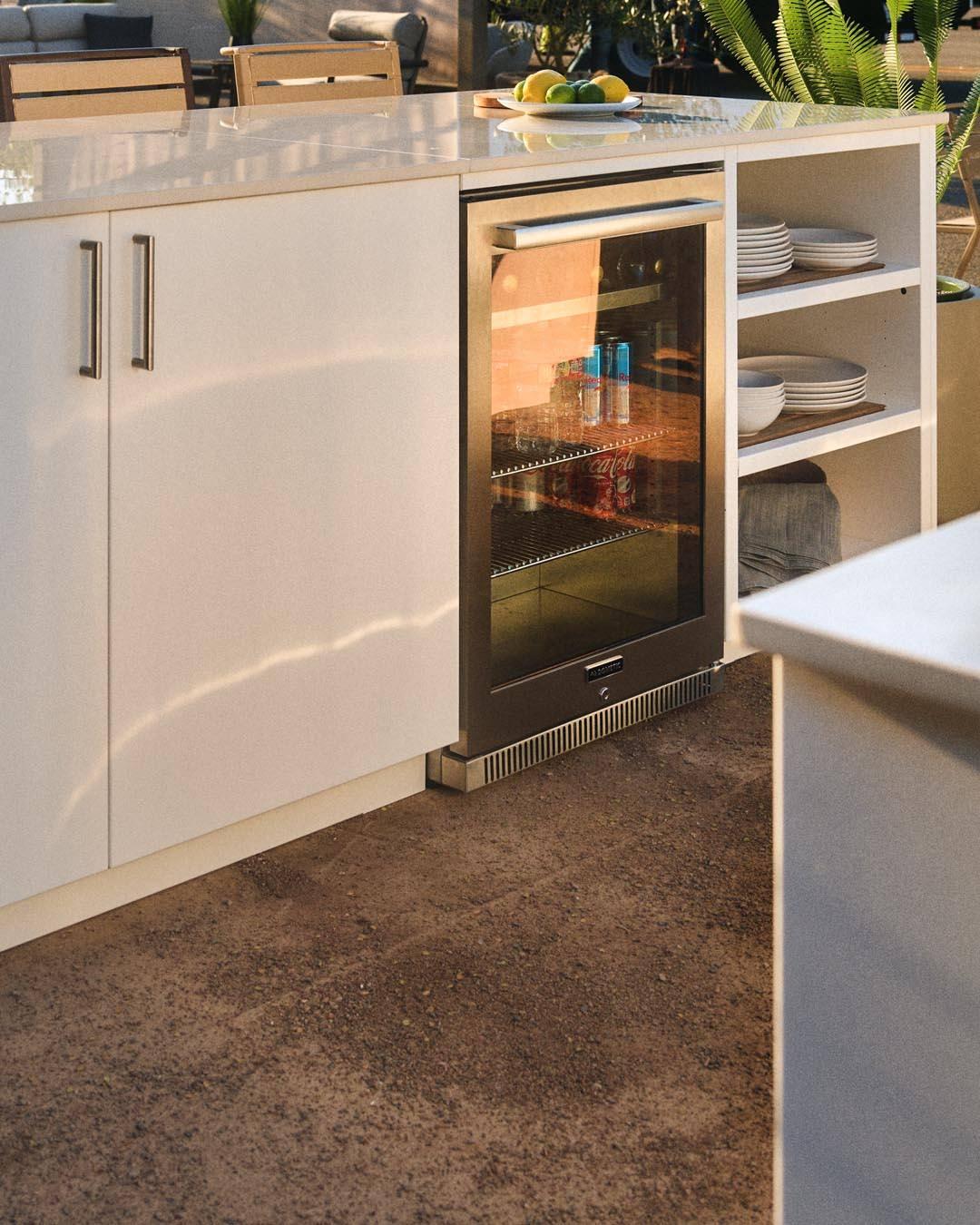
Coordinate the door finish and handle with the surrounding cabinetry, but keep access and operation ahead of appearance. The finished arrangement should account for opening the door, cleaning the appliance, and reaching components as directed by the manufacturer.
Outdoor Kitchen Cabinets & More offers weather-resistant polymer cabinetry. That cabinetry and the refrigeration appliance should be planned together, without assuming the cabinet material changes the appliance’s exposure or ventilation limits.
When does having both make sense?
Separate food and beverage storage may be useful if you regularly prepare meals outside while guests serve themselves drinks. It lets the design assign a distinct location and purpose to each appliance.
Operating two refrigeration appliances also means considering their ongoing energy use. ENERGY STAR’s refrigerator resources provide information about refrigerator energy efficiency. When comparing outdoor models, review each appliance’s published energy information and confirm whether any efficiency certification applies to that specific product.
Before choosing two units, weigh the additional appliance purchase, installation requirements, cleaning, and space commitment against other priorities. A second cooling appliance may mean giving up cabinet storage you would use more often.
Ask yourself:
- Do drinks regularly crowd out ingredients in our current setup?
- Would guests benefit from a separate refreshment area?
- Would we use both appliances during ordinary weeks, not just occasional parties?
- Is refrigerated storage more valuable here than storage for serving pieces or cooking tools?
If the answers are mostly no, one carefully selected appliance may be the more practical choice.
Frequently asked questions
-
Can an outdoor beverage cooler hold food?
Do not assume it can. Check the specific model’s intended use and temperature specifications. If perishable food storage is a priority, evaluate a refrigerator intended for that purpose rather than relying on a beverage cooler as a substitute.
-
Can I use an indoor refrigerator on a covered lanai?
Do not assume a roof makes an indoor appliance suitable outdoors. Select a model approved by its manufacturer for the intended setting, and review its exposure limits and installation instructions.
-
Is a glass-door beverage cooler suitable for a sunny location?
That depends on the model and its placement requirements. Confirm the manufacturer’s guidance on direct sunlight and ambient operating conditions rather than choosing based on door appearance alone.
-
Should I choose the cabinets or refrigerator first?
Develop the overall layout together, but select the exact appliance before finalizing its opening and surrounding cabinetry. Installation dimensions, ventilation, door movement, and service access all need to be coordinated.
Compare the options as part of the whole kitchen
Bring a short storage list to the design conversation: the foods, drinks, containers, and serving pieces you expect to use outside. That list can reveal whether you need flexible refrigerated storage, a dedicated beverage station, or two separate appliances.
The appointment-only Outdoor Kitchen Cabinets & More showroom in Lakewood Ranch includes appliances, layouts, countertops, cabinet door styles, and colors. Private appointments are offered Tuesdays through Saturdays. To begin planning refrigeration alongside your cabinetry and cooking area, Request Free Design & Estimate.


